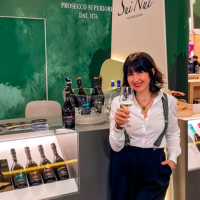

Relocating a wine business within France is never a neutral decision — particularly when the destination is Bordeaux, one of the most symbolic centers of the global wine trade. For Caroline Maurin, the move from Nice marked a strategic turning point, influencing not only operational efficiency but also her day-to-day interaction with the market.
In this second part, Caroline reflects on the impact of this transition, offering insight into how geography shapes opportunity in France. The discussion broadens to include evolving consumption patterns, generational shifts, and the growing expectations placed on both importers and producers in an increasingly competitive and fast-changing environment.
You recently moved your headquarters and warehouse from Nice to Bordeaux. What motivated this decision?
The cost of doing business in Nice is much higher than in Bordeaux, which made it harder to remain competitive on final bottle prices. Moving to Bordeaux was therefore a strategic decision: operating costs are lower, and professional clients in Bordeaux are generally more open to imported wines, even if still deeply rooted in tradition.
Has relocating to one of the world’s most iconic wine cities changed the way you experience the wine trade?
Definitely. Even though competition is stronger, clients are much more willing to taste new wineries and test new products.
Do you feel closer to the international wine conversation now that you are based in Bordeaux?
No, not really. In that respect, the move did not change much for me.
Has the move influenced your logistics, relationships with producers, or distribution network?
Yes. Logistics have become simpler. Relationships with producers have not changed much, but distribution has become easier than it was in Nice.
Do you think Bordeaux offers a different perspective on imported wines compared to the Mediterranean coast?
Yes. Bordeaux is more open-minded, thanks to its many international events, and the presence of the Place de Bordeaux still plays an important role in the wine trade. The city’s location is also very strategic from a logistics point of view.
Are French consumers drinking less but better, as we see in many other markets?
It depends on the age group, but overall I would say yes. In my experience, French consumers aged 25 to 35 tend to drink less but better, choosing wines in the mid- to premium range. Among consumers aged 45 and over, they also drink less, but part of this market still strongly believes that French wine can offer very good quality for under €15 a bottle.
Is there growing interest in fresher, lower-alcohol, or more gastronomic styles?
There is a growing trend toward lower-alcohol and more gastronomic styles, but freshness remains one of the main factors influencing buyers. Gastronomic wines also tend to require the presence of a professional who can explain the wine and serve it properly.
Do natural and low-intervention wines still represent a strong movement in France?
Still present but less dominant. In recent years, organic wines have become more niche, more expensive, and not always consistent in quality from one vintage to another.
Are younger consumers more open to discovering wines from outside Europe?
Yes. We can say that younger consumers, especially non-experts, are generally more open to learning about wines from outside Europe and to discovering wine in a broader way as long as imported wines do not compete with French wines, but rather complement them.
If a foreign producer asked you, “What must I understand before trying to sell wine in France?”, what would you answer — honestly?
First, they need to understand the mindset of the French market and the way it is structured commercially. But above all, they need to understand the importance of communication. The more the importer is seen as a true brand ambassador rather than simply a buyer, the easier it becomes to communicate the wine, build interest among final clients, and eventually generate volume.