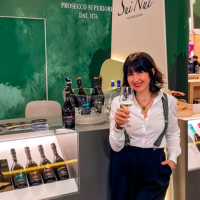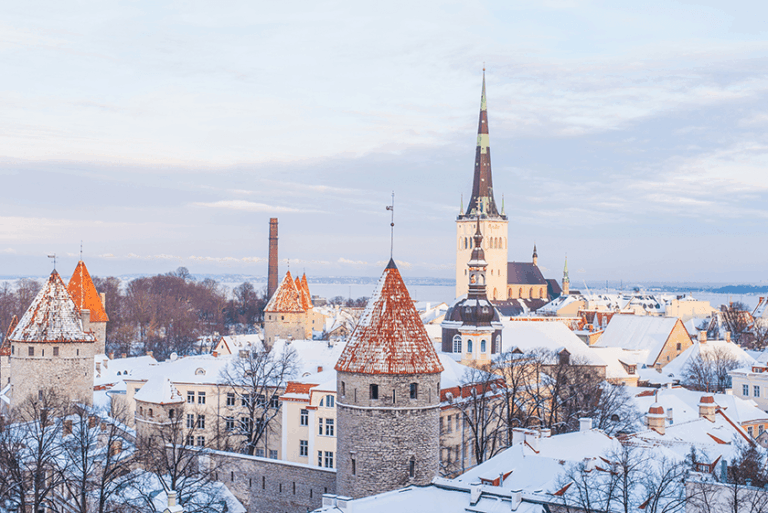

To truly understand the dynamics of the Estonian wine market, I spoke with Mari Koppel, sommelier of MOE OU — a company with a legacy that stretches back to 1886. As one of the oldest distilleries in the world, Moe has long been a cornerstone of Estonia’s spirits industry. In recent years, the company has expanded its focus to include wine importation, responding to the growing interest in wine among Estonian consumers. In this first part of the interview, Mari shares her insights on how Moe’s rich heritage shapes their approach to wine and their evolving wine portfolio.
Who is Moe Oü?
Our company is rooted in the long history of the Moe Distillery, one of the oldest distilleries in Estonia and after the Bols in the world. Alcohol production in Moe dates back centuries, and the modern steam-powered distillery was established in 1886 by pharmacist Jakob Kurberg. Today we continue this tradition by producing spirits largely based on local grain – Sangaste Rye, including vodka, gin and rye whisky.
In 2021 we expanded our activities into wine importing, responding to the growing interest in wine among Estonian consumers and seeking to strengthen the broader image and distribution of our products and brand. Today we collaborate with several international wineries and represent producers from different wine-growing regions and styles. In our portfolio there is around 22 , mostly European (Italy, France, Germany, Austria) but also one producer from Australia. Most of them are by the production small or medium size producers.
Holding the balance, it is not an easy task. Fortunately, these are all processes that can be managed, measured and controlled. Since we are not yet a very large company, our sales are still strongly linked to seasons and key holidays, which actually allows us to plan our production quite precisely.
Working with new wineries and expanding our wine portfolio is currently somewhat of a side activity. As a partner, I would like to dedicate more time and attention to communication with the producers we represent, but time and other resources unfortunately do not always allow this. The same applies to export activities.
1. Your company was born as a historic distillery and only later entered wine import. How has that heritage shaped your approach to wine?
This question can be answered from two perspectives – my personal view and the perspective of our company. As a company, we have increasingly tried to define what kind of partners we want to work with, particularly in terms of their heritage and historical value. This has pushed us to look deeper in order to find, understand and connect shared values.
Naturally, wine and sparkling wine occupy a role in the agricultural context of Europe – especially Southern Europe – that is comparable to the role of strong spirits and grain cultivation in our own world. For that reason, I have increasingly tried to identify and highlight these shared values. We no longer approach things only from a simple standpoint of: there is a producer, there is a wine, and there is a price.
2. Does being both a producer and an importer change the way you evaluate foreign wineries?
Being both a producer and an importer makes you appreciate even more the effort that goes into creating high-quality products. As a producer myself, I also understand better the economic realities and pricing structures behind a product. These factors do not always align with everyone’s expectations, and sometimes they require making alternative choices.
3. If you had to describe the Estonian wine market in three words, what would they be — and why?
I would say: curious, evolving, and demanding.
Curious, because Estonian consumers are very open to discovering new flavours, regions and styles, and they are willing to explore lesser-known producers. The market is also evolving, as general wine knowledge and interest continue to grow year by year – people increasingly care about origin, production methods and quality. At the same time, it is a demanding market: the balance between price and quality has to be right, and producers are expected to have a clear identity and a consistent level of quality.
4. Is Estonia still an emerging market, or has it reached a new level of maturity?
This is a complex question and it cannot really be answered with a simple yes or no. I believe that, due to socio-economic factors and the emergence of new generations, no country ever becomes completely “mature” in that sense.
Referring back to my previous answer, Estonia is certainly still an evolving market. From time to time it reaches certain consumption plateaus, which then encourage both producers and importers to make new choices and adjust their direction.
5. What is the biggest misconception foreign producers have about Estonia?
I wouldn’t necessarily call it a misconception — it is often simply a matter of geography and market understanding.
Some larger producers see Estonia as a stepping stone to the Scandinavian market. In reality, however, it is not that straightforward. The alcohol policies and retail systems in Estonia and the Nordic countries are very different, which means the markets function in different ways.
Another common assumption is to compare Estonia directly with countries like Finland, Sweden or Norway and expect similar volumes. In practice, our population and overall consumption levels are much smaller, which naturally shapes both expectations and negotiations.
For producers who understand the scale and specifics of the Estonian market, however, it can be a very dynamic and rewarding place to build a presence.
6. From your vantage point, how does wine compete — or coexist — with spirits and craft beer in Estonia?
I believe that wine holds a very solid and equal position in Estonia alongside spirits and craft beer. Each category has its own audience and consumption context, and they tend to coexist rather than directly compete.
Traditionally, beer has been the most widely consumed alcoholic beverage in Estonia, while spirits also hold a strong cultural position in the region. In practice, Estonian consumers often move between categories depending on the occasion: beer may dominate casual social settings, spirits remain important in traditional drinking culture, while wine is increasingly associated with food, social gatherings and a more lifestyle-oriented approach to drinking.
This balance means that wine does not necessarily replace other categories, but rather complements them within a diverse and evolving alcohol market.
7. Have you noticed shifts in consumption patterns between wine and other alcoholic beverages in recent years?
Overall, the trend seems to be less about one category replacing another and more about diversification. Estonian consumers often choose beverages depending on the occasion — beer in casual settings, spirits in traditional contexts, and wine increasingly associated with food culture and social gatherings.
Stay tuned for the second part of the interview with Mari, where she explores Consumption Trends, Alcoholic Beverage Competition, and Market Challenges in the Estonian market.